
Base and Subgrade
The intended use, existing concrete, roots, wet soil, or disturbed fill can change how much excavation and compacted stone preparation the surface needs.
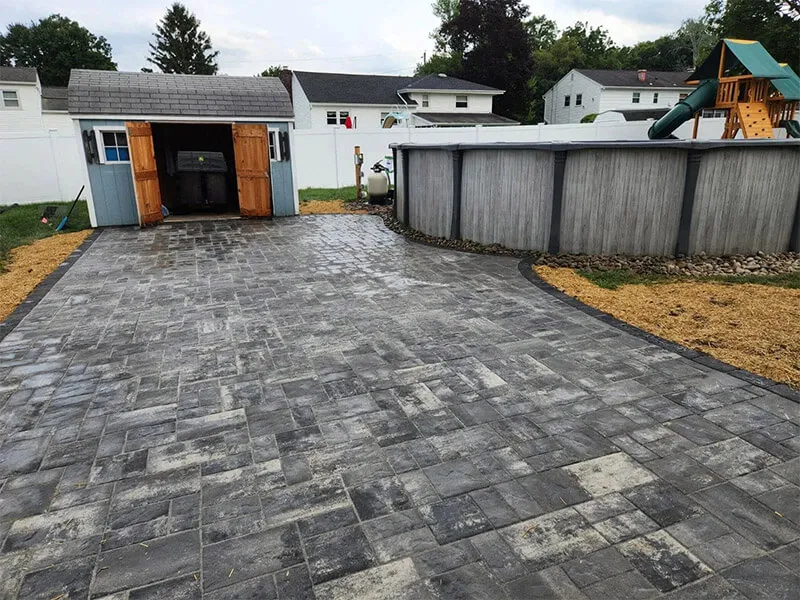
Patios, walkways, and pool decks planned around the grade, drainage, access, and winter conditions of your New Windsor property.
A finished paver surface can make a muddy route cleaner, define a dining area, improve the walk to an entry, or complete the space around a pool. Its performance depends on decisions that are mostly hidden after installation: excavation, the exposed soil, the compacted base, finished pitch, edge restraint, and the way the surface meets doors, steps, lawns, walls, driveways, or pool coping.
Those decisions are especially important where rainwater already collects or crosses the proposed footprint. New Windsor maintains a municipal stormwater program, so runoff should be treated as part of the property—not pushed toward a foundation, neighboring lot, street, or another low area. Lawn Spa reviews water movement and surrounding elevations before recommending the layout and related drainage work.
Material and pattern still matter, but they come after the site questions. A useful proposal should distinguish the paver product from the preparation below it and explain how access, demolition, disposal, cuts, borders, transitions, and restoration affect the scope.
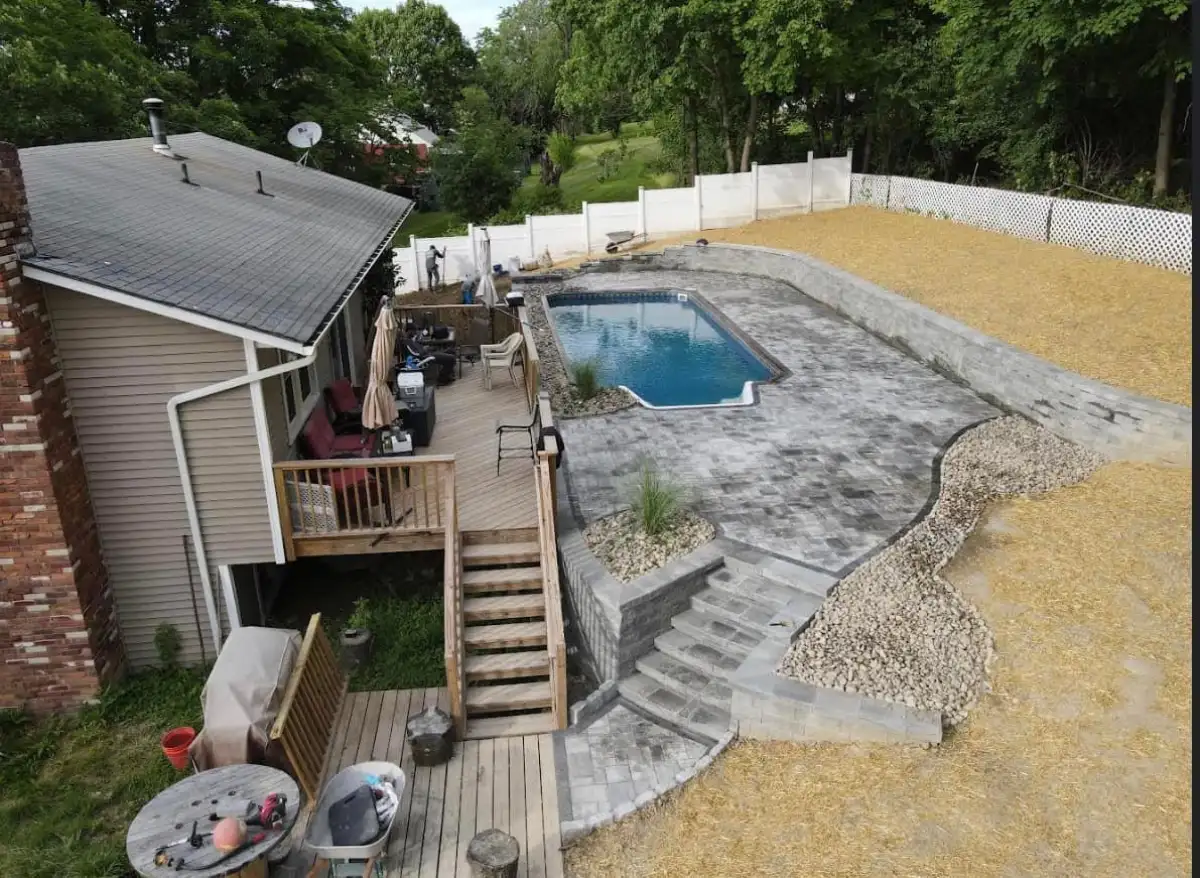
A New Windsor patio may need room for a dining table, grill, fire feature, steps, and a clean path to the lawn. A front walkway may need safer footing and a better transition between the driveway and entry. A pool deck may need texture, pitch, and a layout that works around wet traffic and furniture. Lawn Spa starts with the use case, then recommends the surface size, material, border, and construction approach.
Where access is narrow, the plan needs to account for how material and equipment reach the work area. Where a patio is one phase of a larger outdoor project, lighting sleeves, drainage, retaining walls, fencing, and future planting edges are easier to coordinate before the surface is set.
The same square footage can price differently depending on preparation, drainage, access, and use.
The intended use, existing concrete, roots, wet soil, or disturbed fill can change how much excavation and compacted stone preparation the surface needs.
Pitch and finished height need to work around the house, steps, pool, downspouts, and low lawn areas before the paver pattern is finalized.
Patios, walkways, pool decks, and vehicle areas place different demands on the paver, base, joints, edges, texture, and snow-removal plan.
Gate width, staging space, soil removal, utilities, and future walls, lighting, fencing, or landscaping can change the order and cost of the work.
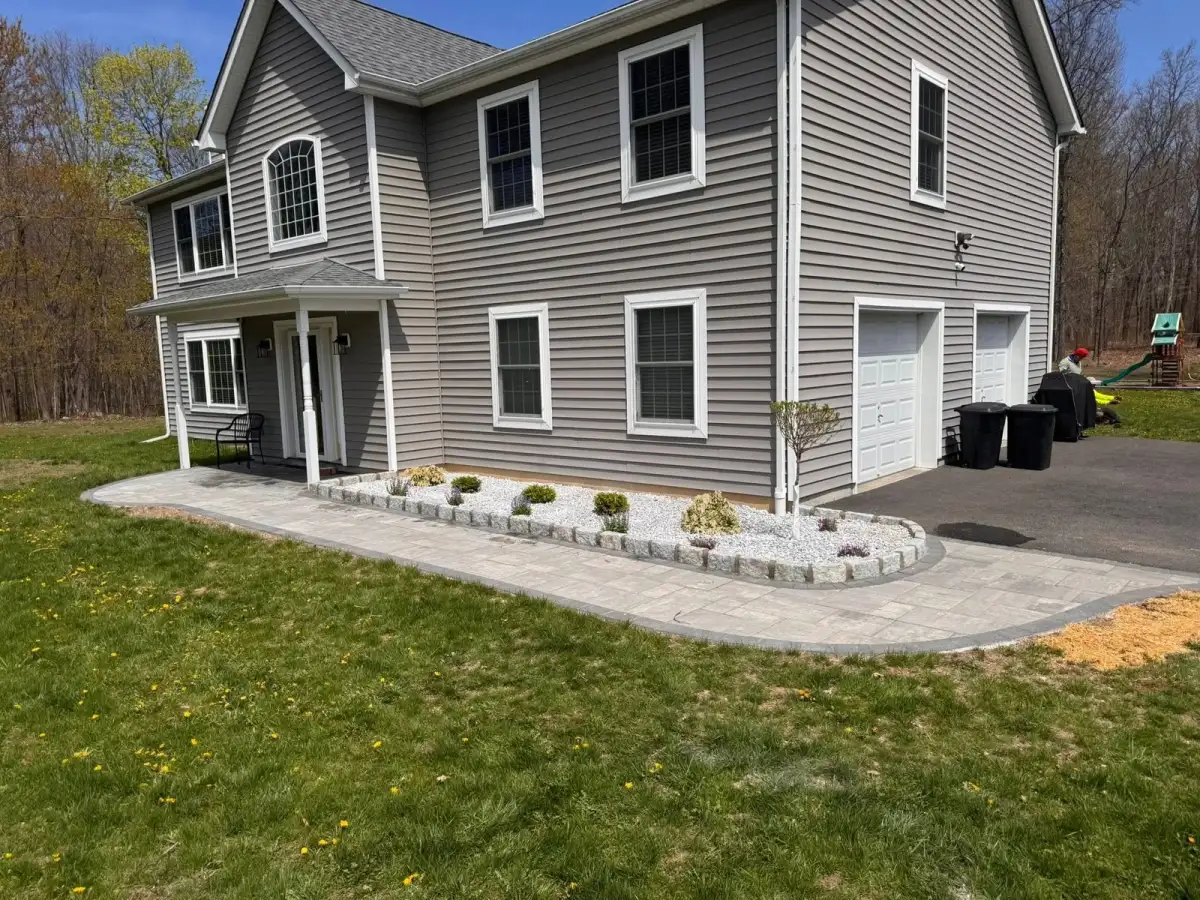
A strong paver project starts with the conditions around the surface. Lawn Spa reviews the intended use, approximate size, water movement after rain, and how the pavers need to meet steps, a pool, a wall, a driveway, or future landscaping. If the work area has a narrow gate or limited staging room, those details shape the construction plan early.
New Windsor homeowners often ask whether pavers can replace old concrete, solve muddy lawn transitions, make a pool area feel finished, or create a lower-maintenance entertaining area. Those are all useful starting points. Lawn Spa can explain which items are part of the paver scope and which may need related drainage solutions, excavation, retaining walls, or landscape lighting.
Compare local service information and related construction details before choosing the final surface layout.
Review Lawn Spa's complete paver installation service, browse the service areas directory, or discuss the New Windsor property directly. Early coordination helps the patio, walk, or pool deck meet nearby grades, lawn edges, steps, walls, and future outdoor work cleanly.
Discuss Your Paver ProjectRoutine care is generally straightforward: remove leaves and debris, clean stains with a method suited to the paver, watch for joint-sand loss, and address rocking units, spreading joints, or standing water early. Winter care should also follow the paver manufacturer's guidance for deicers and snow-removal equipment.
A 20-by-20 patio is 400 square feet, but size alone cannot establish a reliable installed price. Demolition, access, excavation, exposed soil, drainage, paver selection, pattern, borders, steps, disposal, and restoration can all change the scope. Compare written estimates that describe the same work, or read the Hudson Valley paver patio cost guide before requesting a property-specific quote.
A well-built paver patio can remain useful for decades, but there is no single lifespan for every property. Base preparation, drainage, edge restraint, traffic, material quality, freeze-thaw exposure, and maintenance all affect performance. One advantage of a unit-paver surface is that individual areas can often be lifted and repaired without replacing the entire patio.
Sealing is not automatically required on one fixed schedule. The paver product, previous sealer, joint system, sun and moisture exposure, appearance goals, and manufacturer instructions should guide the decision. Inspect the surface first and confirm product compatibility before applying another coat.
Permit or review requirements depend on the complete scope, including grading, drainage, walls, pools, structures, and property-specific constraints. The Town of New Windsor Building Department is the appropriate source for current requirements. Lawn Spa can help identify the project details you should have ready when confirming what applies.