

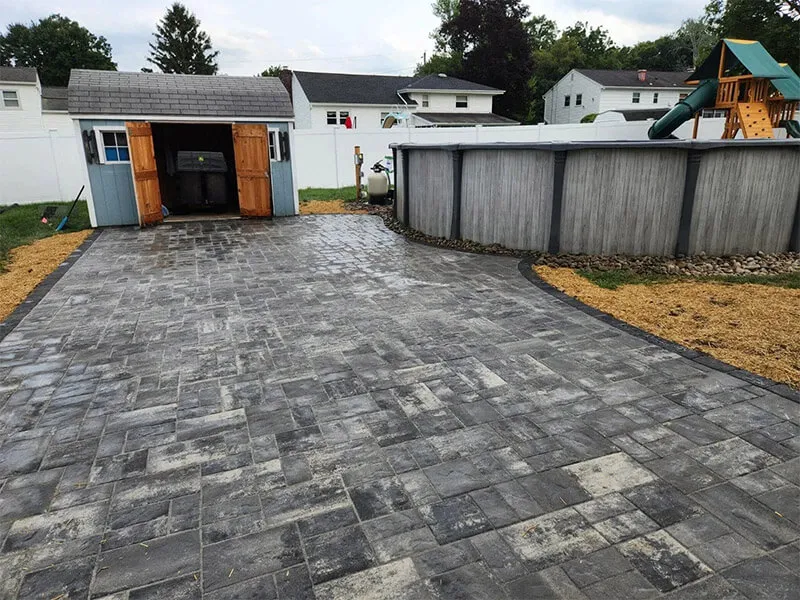
Before booking pavers in Newburgh, the most useful questions are about the work below the finished surface: base prep, drainage, access, material rating, and how the new patio, walkway, driveway apron, or pool deck will connect to the rest of the yard. A good estimate should help you compare paver contractors by the installation choices that decide whether the finished surface drains correctly, stays level, handles Hudson Valley freeze-thaw cycles, and fits the way you actually use the property.
Lawn Spa Landscaping Inc. serves Newburgh, New Windsor, and the surrounding Hudson Valley from its North Plank Road base. The company installs pavers, broader hardscaping, pavers and pool decks, drainage, excavation, landscape lighting, pool deck installation, and landscape work. That matters because a paver surface rarely stands alone. A patio may affect drainage. A pool deck may need future landscaping. A front walk may tie into grading, steps, or a driveway edge.
What Kind of Paver Surface Are You Booking?
Start by naming the real use of the area. A backyard entertaining patio needs furniture clearance, grill space, circulation, and a clean lawn transition. A front walkway needs safer footing and a neat connection between the driveway, porch, and entry steps. A pool deck needs comfortable texture, splash-zone drainage, coping transitions, and room for lounge furniture. A driveway apron or parking area needs a thicker base and pavers rated for vehicle loads.
This first answer shapes the estimate. If the surface will carry only foot traffic, the base, paver profile, and edge details may be different from a driveway or pool area. If the space will eventually connect to a pool, retaining wall, fence, or lighting plan, tell the estimator now so grades and edges do not create avoidable rework later.
How Much Do Pavers Cost Around Newburgh?
Many paver patio installations in the Newburgh and Hudson Valley area fall around $15 to $30 per square foot for standard interlocking concrete pavers. Natural stone, travertine, pool decks, driveway pavers, drainage corrections, tight access, complex patterns, heavy excavation, and old concrete removal can increase the final price. The most useful estimate explains what is included, not just the square-foot number.
Ask whether the estimate includes excavation, geotextile fabric when needed, compacted crushed stone base, bedding layer, paver material, cuts, edge restraints, joint material, final compaction, cleanup, and disposal. If two estimates use different base depths or leave drainage out, they are not the same scope even when the top-line price looks close.
What Happens Below the Pavers?
The visible paver is the last layer. The long-term performance comes from what sits underneath it. Newburgh-area properties can include clay-heavy soil, old fill, sloped yards, older concrete, compact lots, side-yard access limits, and drainage patterns that change after storms. A strong paver installation reviews those conditions before the pattern and color are finalized.
For most patio and walkway projects, the estimate should describe excavation depth, compacted stone, bedding sand or setting material, edge restraint, and grade tie-ins. For driveway or vehicle areas, ask about the heavier base and paver profile required. For pool decks, ask how splash water, coping, furniture, and winter movement will be handled.
Where Will the Water Go?
Drainage should be answered before color, border, and pattern decisions. A paver surface needs pitch so water moves away from the house, garage, pool, steps, and low lawn areas. Some projects only need corrected grading and a clean lawn tie-in. Others may need a channel drain, French drain, dry well connection, downspout adjustment, or a broader drainage solution.
This is especially important near basement entries, pool decks, older patios, walkways with winter icing, and back doors where water already moves toward the structure. Pavers should not cover a drainage problem. They should be planned with the water problem visible so the finished surface protects the base and remains safer during wet or freezing weather.
Which Paver Material Fits the Use?
Interlocking concrete pavers are common for Hudson Valley patios and walks because they provide design flexibility and can perform well when installed over the right base. The paver should be rated for Northeast freeze-thaw exposure, and the selected profile should match the use. A pedestrian path, a pool deck, and a driveway area have different needs.
Natural stone and travertine can work for some outdoor living areas, but the finish, maintenance expectations, budget, and heat comfort should be discussed before committing. For a pool deck, ask about texture and drainage. For a front walk, ask about snow clearing and step transitions. For a patio, ask how furniture feet, border details, and grill traffic will affect the layout.
Site Conditions to Review Before a Paver Estimate
Before requesting a paver estimate, gather the address, rough dimensions, preferred timing, and photos from several angles. Include close-ups of doors, steps, slopes, downspouts, low spots, existing concrete, pool edges, retaining walls, fences, gates, and narrow access points. If water collects after a storm or ice forms in one area every winter, photograph that too.
For Newburgh properties, those details help Lawn Spa determine whether the pavers are a straightforward surface installation or whether grading, excavation, drainage, or future phases should be included. Lawn Spa also plans pavers in New Windsor, NY around access, grade, drainage, and pool-deck connections.
Questions Worth Asking Before You Book
- What base depth is recommended for this patio, walkway, driveway area, or pool deck?
- Will geotextile fabric, compacted crushed stone, edge restraints, and polymeric sand be included?
- How will the surface pitch water away from the house, steps, pool, and low lawn areas?
- Does the selected paver match vehicle traffic, pool use, snow clearing, or Northeast freeze-thaw exposure?
- Will the layout support future lighting, retaining walls, fencing, pool work, or planting beds?
- What access, staging, soil disposal, old concrete removal, or cleanup details affect the estimate?
Ready for a Newburgh Paver Estimate
If you are planning pavers in Newburgh, use the questions above to compare the full scope, not just the surface color or square-foot price. Lawn Spa Landscaping Inc. can review the site, explain base and drainage needs, compare material options, and identify whether related excavation, drainage, hardscaping, or pool-deck planning should be included before work starts.
Explore paver installation, confirm service in Newburgh, or request a free estimate. You can also call (845) 467-0845 with photos, approximate dimensions, timing goals, and notes about water, access, or future outdoor phases.
How Much Should a 20x20 Paver Patio Cost?
A 20-by-20-foot patio covers 400 square feet. Lawn Spa's published Hudson Valley paver cost guide places many standard interlocking paver patios around $15 to $30 per square foot installed. Applied to 400 square feet, that gives a rough planning range of $6,000 to $12,000.
That calculation is a starting point, not a quote. Removing concrete, correcting drainage, moving material through a narrow side yard, adding steps or borders, choosing natural stone, or building for vehicle loads can change the final number. When comparing estimates, ask what each price includes below the visible pavers.
Can Pavers Be Installed Directly on Dirt?
Not for a permanent patio, walk, or pool deck. Soil moves as it becomes wet, dries, freezes, and thaws. Pavers placed directly on dirt are more likely to settle unevenly, spread at the edges, trap water, or create trip points.
The preparation should be matched to the surface's use and the site. A typical scope may include excavation, subgrade preparation, compacted aggregate, bedding material, edge restraints, joint material, and final compaction. Ask the contractor to describe those layers and how compaction will be verified rather than accepting “base included” as the only detail.
Are Pavers Cheaper Than Poured Concrete?
Not necessarily. A basic concrete slab may have a lower initial price than some paver systems, while decorative concrete, demolition, reinforcement, difficult access, and drainage work can narrow the difference. Pavers also allow individual units to be lifted or replaced if access below the surface is needed later.
Compare proposals with the same footprint, excavation, base preparation, drainage plan, edge work, steps, and cleanup. A surface-only price does not show whether the two contractors are quoting the same finished job.
What Access and Timing Details Affect the Estimate?
Photos and rough measurements help, but equipment access often changes how a project can be built. Show gate widths, fences, steps, slopes, septic areas, existing concrete, overhead obstacles, and the route from the street to the work area. Ask where materials will be staged and where excavated soil or demolished material will go.
Timing should cover more than a proposed start date. Ask how long the work area is expected to be unavailable, what weather or site discoveries could change the sequence, and whether future hardscaping, lighting, fencing, retaining walls, or pool work should be planned before the pavers are installed.
Where is the cheapest place to buy pavers?
Start by comparing the total delivered cost of the exact product, not only the displayed price. Record the manufacturer, product line, color, finish, dimensions, pallet coverage, order minimum, delivery charge, lead time, return terms, and allowance for cuts or breakage. Also ask whether the same line is likely to be available if matching pieces are needed later.
If a contractor is supplying the materials, ask for those specifications in the proposal. A low pallet price does not include demolition, disposal, excavation, aggregate, equipment, labor, edge restraint, joint material, drainage, cleanup, or lawn restoration. For a realistic comparison, separate the material choice from the full installed scope. Our Hudson Valley paver patio cost guide outlines the major variables behind a finished project total.
What is the best base to put under pavers?
There is no one base depth or aggregate specification that is best for every project. A front walk, dining patio, pool deck, and vehicle area place different demands on the assembly. The exposed subgrade, intended use, selected paver system, drainage conditions, and manufacturer instructions should all inform the recommendation.
Ask each contractor to describe the proposed excavation, subgrade evaluation, aggregate, compaction, bedding layer, edge restraint, and joint material. The proposal should also explain what happens if excavation reveals soft, wet, disturbed, or otherwise unsuitable soil. In Newburgh's seasonal climate, managing water and creating a stable foundation are connected decisions; simply adding more aggregate does not explain where runoff will go.
What is the best paver manufacturer?
The better question is: which specific product line fits this application? Manufacturers offer products with different thicknesses, dimensions, textures, finishes, edge profiles, color blends, and intended uses. A pool surround may place more emphasis on surface texture and transitions at coping, while a walkway may prioritize comfortable footing and clean connections to steps or pavement.
Compare product-level information: suitability for the intended use, freeze-thaw guidance, cleaning instructions, local availability, replacement availability, and the actual written warranty terms. Put the chosen product line and permitted substitutions in the contract. Broad labels such as “premium paver” do not establish that two estimates include equivalent materials.
How can I compare reputable paving companies in Newburgh?
First confirm that you are comparing the right trade. Search results for “paving companies” may include asphalt driveway contractors, material suppliers, masonry contractors, and landscape hardscape installers. If the project is a segmental paver patio, walkway, entry, or pool deck, ask specifically about experience with that type of assembly and site condition.
Give every contractor the same footprint, intended use, material target, and list of adjoining features. Then compare written scopes line by line. Ask who will perform the work, how the property will be accessed and protected, where excavated material will go, how drainage and finished pitch will be handled, and how unexpected conditions or substitutions receive approval. Verify current insurance and credentials directly.
For connected work—such as steps, a wall, or multiple outdoor surfaces—review whether a broader hardscaping plan would prevent conflicting grades or piecemeal transitions.
What maintenance should I expect?
Routine care commonly includes removing debris, cleaning spills promptly, monitoring joints and edges, and addressing rocking pavers or drainage issues before movement spreads. Ask which joint material is proposed and what maintenance it may need over time.
Cleaning products, pressure-washing methods, de-icing products, and sealers should be compatible with the specific paver. If sealing is discussed, ask what the product is intended to do, when it can be applied, how the surface must be prepared, and what future reapplication may involve.
What is the best plant to grow between pavers?
There is no single best choice for every paver surface. First decide whether the joints are designed to hold plants at all. Narrow structural joints are normally filled with the specified joint material; replacing that material with soil can invite movement, weeds, and maintenance problems.
For an intentionally spaced garden path, a planting choice should match sunlight, moisture, joint width, foot traffic, winter exposure, and the amount of trimming or weeding the homeowner wants to manage. Discuss planted joints during design so the spacing, base, soil pockets, and edging support that goal. A conventional entertaining patio or paver pool deck will usually call for a different joint treatment than a lightly used garden path.
Are there different grades of pavers?
Yes, but “grade” is too vague to use by itself. Product lines can differ in thickness, dimensions, texture, finish, edge profile, color blend, intended application, and manufacturer specifications. A product chosen for a pedestrian patio may not be the right product for a driveway or another heavier-use surface.
Ask for the manufacturer, product line, size or size blend, color, finish, and border selection in writing. Then confirm that the product is intended for the planned application. Product identity matters more than a general label such as premium, standard, or contractor grade.
What is best to fill the gaps between pavers?
The right joint material depends on the paver system, joint width, planned use, and drainage design. Conventional interlocking surfaces may use a compatible jointing sand. Permeable systems are built differently and use specified open-graded aggregate in the joints. Intentionally planted garden-path joints are another distinct design.
Ask which joint material is included and why it fits the selected paver. The installation and activation requirements should follow the paver and joint-material manufacturers' directions. Joint fill is not interchangeable with the bedding layer below the pavers, and soil should not be substituted into narrow structural joints unless the surface was intentionally designed for planting.
FAQ: Newburgh Paver Projects
Ask about excavation, base depth, compacted stone, edge restraints, drainage pitch, polymeric sand, cleanup, material rating for freeze-thaw weather, and whether the layout should account for pools, walls, lighting, fencing, or future landscaping.
Installed paver costs vary with square footage, excavation, base depth, material selection, border work, drainage, demolition, access, and whether the area must support pool traffic or vehicle loads.
Drainage protects the base, reduces settlement risk, and limits recurring puddles or icy spots. Pitch, grading, drains, downspouts, and low lawn areas should be reviewed before the paver layout is finalized.
Yes. If the pavers may later connect to a pool deck, lighting, retaining wall, planting beds, fencing, or drainage improvements, mention it during the estimate so grades, edges, and future tie-ins can be planned.